Ileana Moro Cuban-Costarican, b. 1992
Overview
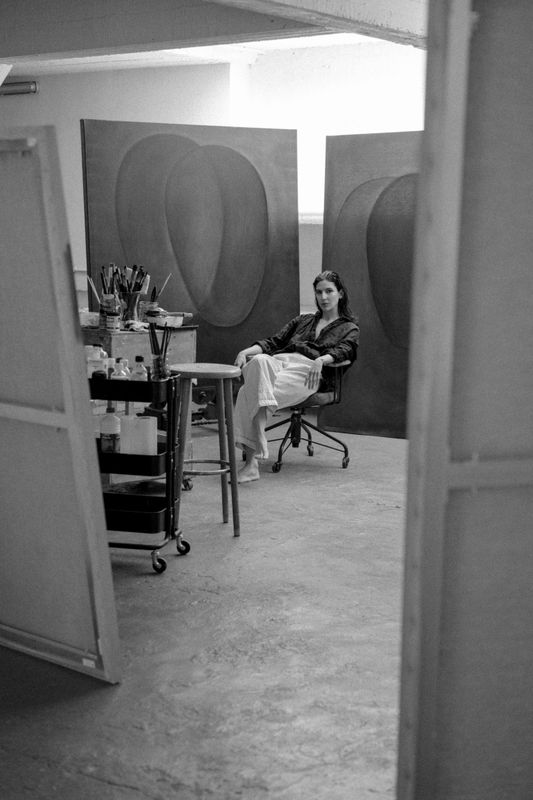
My practice feels a lot like keeping a visual diary. Through painting, I try to reflect on existence and the quiet forces that shape both our inner and outer lives. I’m less interested in depicting the physical world and more drawn to emotional and psychological landscapes, those fleeting feelings, tensions, and questions that come with simply being human.
There are no human figures in my work, but that doesn’t mean humans are absent. Instead, I try to paint the emotional weather we all experience: the storms, the stillness, the soft twilight moods that are often hard to put into words but deeply felt. These spaces become places where memory, intuition, and perception meet.
A subtle spiritual thread runs through my work. I’m drawn to the dialogue between shadow and light, and to those in-between moments where things feel slightly suspended—when the visible world seems to open into something more mysterious. These spaces feel like quiet thresholds, inviting reflection and a deeper connection to inner experience.
My process is very intuitive. I allow room for spontaneity and for subconscious impulses to guide the work, moving gently between control and letting go. Rather than offering clear answers or fixed stories, I hope the paintings remain open, so each viewer can bring their own feelings and interpretations into them.
Ileana Moro (b. 1992, Costa Rica) is a self-taught multidisciplinary artist of Cuban and Nicaraguan heritage, currently based in Antwerp, Belgium. Her practice explores emotional and psychological landscapes through painting, approaching the canvas as a form of visual diary and reflection on inner life.
Moro’s work is characterized by atmospheric compositions that evoke the shifting “emotional weather” of human experience—moments of tension, stillness, and quiet introspection. The absence of human figures directs attention toward mood, perception, and the subtle forces that shape our inner worlds.
Working through an intuitive process that allows spontaneity and subconscious imagery to emerge, Moro creates contemplative spaces where shadow and light interact, inviting viewers into deeper reflection and personal interpretation.
Moro’s work is characterized by atmospheric compositions that evoke the shifting “emotional weather” of human experience—moments of tension, stillness, and quiet introspection. The absence of human figures directs attention toward mood, perception, and the subtle forces that shape our inner worlds.
Working through an intuitive process that allows spontaneity and subconscious imagery to emerge, Moro creates contemplative spaces where shadow and light interact, inviting viewers into deeper reflection and personal interpretation.